 Pin
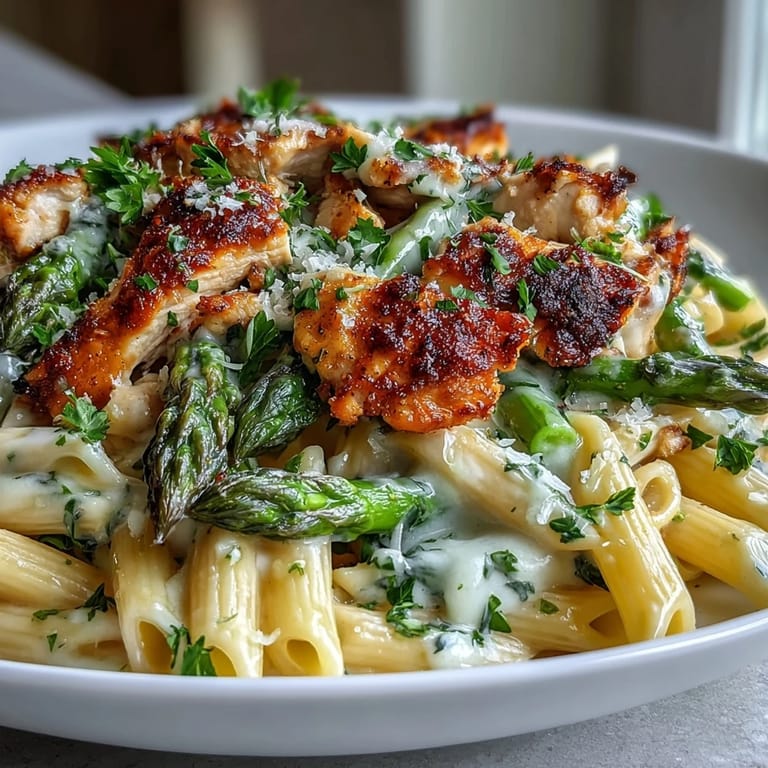
Pin There's this moment when you're standing at the stove, watching cream swirl into golden butter, and you realize how a few good ingredients can transform into something restaurant-worthy without the fuss. That's what happened the first time I put together this Crispy Parmesan Asparagus Chicken Pasta, except I almost burned the asparagus because I got distracted listening to my neighbor's dog barking at a delivery truck. The happy accident actually made the cheese crust more dramatic, and suddenly everyone at the table was asking how I'd gotten it to caramelize so perfectly. Now it's become my go-to when I want to impress without spending all evening in the kitchen.
I made this for my sister during a random Tuesday when she called saying she'd had the worst day at work and needed comfort food stat. Watching her face light up when she took that first bite of creamy pasta with crispy asparagus on top—that's when I knew this recipe had staying power. She texted me the next morning asking for it again before she'd even finished her coffee.
Ingredients
- Asparagus (about 400 g): Snap off the woody ends by bending them until they naturally break, which is way more reliable than cutting and wastes less of the tender part you actually want to eat.
- Asiago and Parmesan cheese (1/3 cup each, grated): Buy these freshly grated or grate them yourself because pre-shredded versions get coated with anti-caking agents that turn weird and clumpy when they melt together.
- Lemon zest (1/2 teaspoon): The zest does more flavor work than the juice alone, hitting that little brightness that keeps the whole dish from tasting one-dimensional.
- Chicken breasts (2 medium, about 400 g): Pound them to even thickness so they cook at the same rate and don't end up with dry edges and a raw center.
- Penne or rigatoni pasta (350 g): The tube shape catches and holds that creamy sauce way better than spaghetti would, making every bite substantial.
- Heavy cream (1/2 cup) and chicken broth (1/2 cup): Together they create a sauce that's luxurious without being overwhelming, and the broth adds complexity the cream alone can't deliver.
- Fresh lemon juice (about 2 tablespoons): This is your secret weapon for cutting through the richness at the very end, so taste and adjust before serving because citrus strength varies wildly between lemons.
Tired of Takeout? 🥡
Get 10 meals you can make faster than delivery arrives. Seriously.
One email. No spam. Unsubscribe anytime.
Instructions
- Get your oven ready and prep the asparagus:
- Preheat to 220°C (425°F) and line a baking sheet with parchment paper. Toss the asparagus with olive oil, salt, pepper, both cheeses, and lemon zest until everything's coated, then spread in a single layer and roast for 12–15 minutes until the tips are golden and crispy but the stalks still have some give.
- Sear the chicken until it's golden and cooked through:
- Season the breasts with salt, pepper, and garlic powder. Heat olive oil in a large skillet over medium-high heat and sear each side for 4–5 minutes until the exterior is golden and a quick internal check shows it's cooked through, then let it rest for 5 minutes before slicing thinly.
- Cook the pasta to al dente:
- While the chicken rests, get a pot of salted water boiling and cook your pasta until it has just a slight firmness when you bite it. Reserve 1/2 cup of that starchy water before draining because it's liquid gold for adjusting your sauce.
- Build the creamy sauce base:
- In that same skillet where the chicken lived, melt butter over medium heat and let the minced garlic get fragrant for about a minute. Pour in the broth and cream, let it simmer for 2–3 minutes until slightly thickened, then stir in the Parmesan until everything melts into a glossy, cohesive sauce.
- Bring everything together with silky pasta:
- Add the drained pasta to the sauce along with the lemon juice and about half of your reserved pasta water. Toss constantly, adding more pasta water as needed until the sauce coats every piece without being soupy or clinging. Season with salt and pepper to taste.
- Finish with chicken and asparagus, then serve:
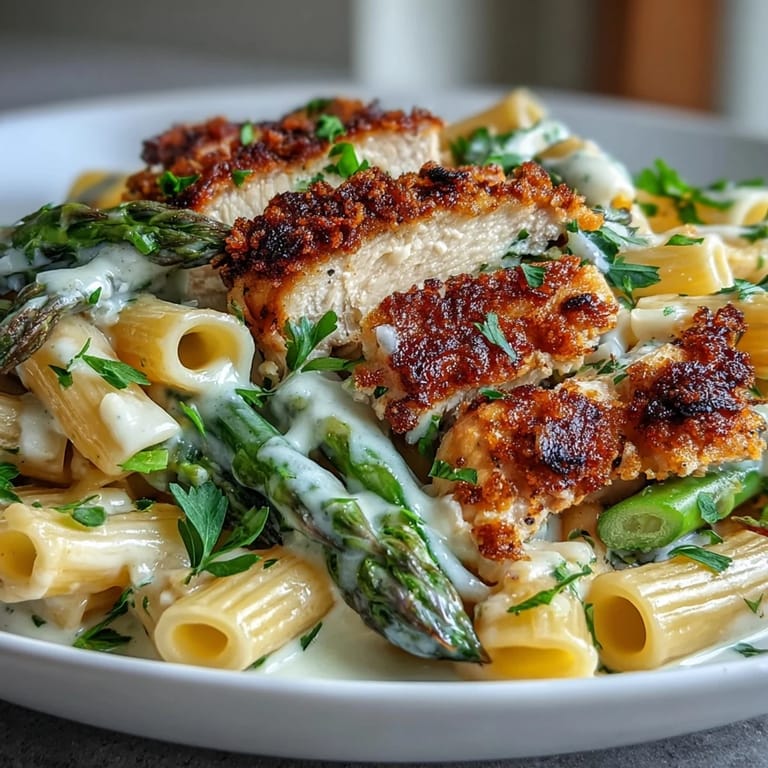
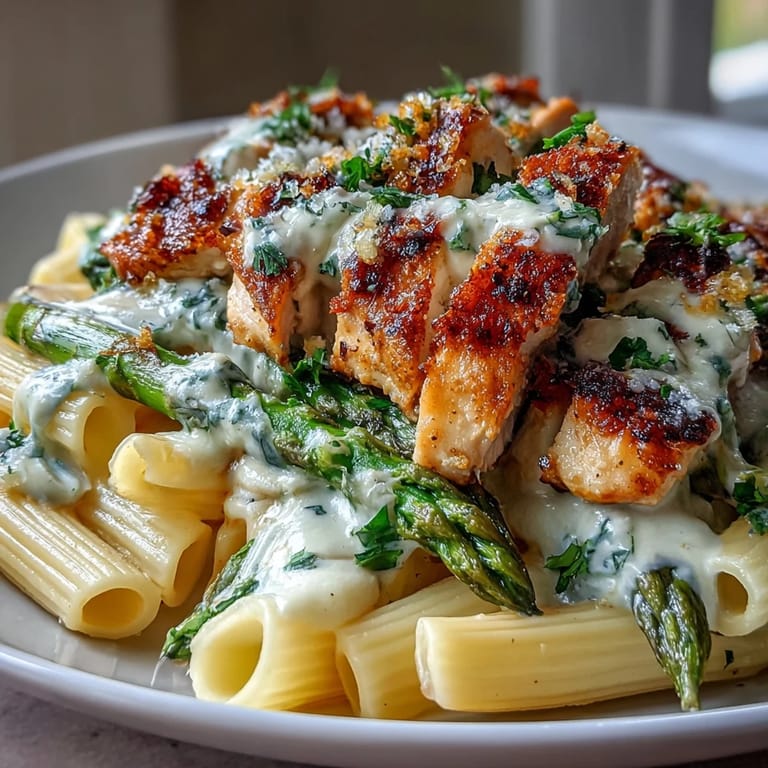
- Gently fold in the sliced chicken and the chopped roasted asparagus pieces, warming everything through for just a minute so the asparagus stays crispy. Serve immediately, garnished with fresh parsley and a shower of extra Parmesan if you're feeling generous.
 Pin
Pin My neighbor asked what smelled so incredible while I was cooking, and I ended up inviting her over on the spot because she'd been dealing with a kitchen renovation and hadn't cooked in weeks. Something about watching someone rediscover how good simple, quality food tastes made the effort of cooking feel like less of a chore and more like an act of generosity.
Why the Cheese Matters
Using both Asiago and Parmesan instead of just doubling one of them gives you complexity—Asiago brings a nuttier, slightly more assertive flavor while Parmesan adds that umami depth and those little crystalline bits that hint at age and quality. The combination on the roasted asparagus creates texture that pasta sauce alone can never deliver, and when it all comes together on your fork, it's like three different elements decided to be friends. If you can't find Asiago, don't stress and just use extra Parmesan, though the dish loses a bit of that savory complexity that makes people pause and ask what you did to make it taste so good.
The Lemon Balance
Here's something I learned the hard way: a cream sauce without acid is like a joke without a punchline. The lemon does the heavy lifting of keeping everything tasting fresh instead of coating your mouth, and since pasta absorbs flavors as it sits, finishing with lemon juice rather than adding it to the sauce gives you control over the final taste. I once added the lemon too early and watched it curdle the cream slightly, so now I treat it like the very last thing, a moment where you taste and adjust until it makes your mouth water a little.
Making It Your Own
The beauty of this dish is that it respects the main ingredients while leaving room for your personal touch and mood on any given night. Some people swear that a pinch of red pepper flakes brings just enough heat to make everything sing, while others add fresh spinach or sun-dried tomatoes for color and earthiness. Fresh herbs like basil or tarragon can replace the parsley, and if you're feeling adventurous, a touch of Dijon mustard stirred into the sauce adds a subtle tang that deepens the lemon's effect without being obvious.
- Chili flakes add gentle heat without overwhelming the delicate balance of cream and lemon.
- A handful of fresh spinach wilted into the sauce at the end adds color and iron without changing the flavor profile.
- Fresh basil torn over top at serving time brings an aromatic freshness that makes the whole dish feel more summery.
 Pin
Pin This dish has become the recipe I make when I want the kitchen to feel warm and the table to feel like home, and it never disappoints. There's real joy in plating something that looks like it took all day but tasted absolutely worth every minute of effort.
Recipe FAQ
- → Can I make the asparagus ahead of time?
Roast the asparagus up to 4 hours before serving and store at room temperature. Add to the pasta during the final minute of tossing to warm through without losing the crispy cheese coating.
- → What other pasta shapes work well?
Short sturdy pasta like penne, rigatoni, or campanelle holds the creamy sauce beautifully and catches the chopped asparagus pieces. Avoid long strands like spaghetti—the toppings won't distribute evenly.
- → Can I use pre-shredded cheese?
Freshly grated cheese melts more smoothly and provides better flavor. Pre-shredded varieties contain anti-caking agents that can make the sauce grainy. Invest five minutes to grate your own Parmesan and Asiago.
- → How do I prevent the cream sauce from separating?
Keep the heat at medium or lower when adding cream—high heat can cause dairy to break. Stir continuously and don't let the sauce reach a boil. The pasta water helps emulsify everything into a silky consistency.
- → Can I make this lighter?
Substitute half-and-half for heavy cream and increase the pasta water slightly. Use less butter and more lemon juice to maintain brightness. The roasted asparagus still delivers plenty of flavor.
- → What vegetables can substitute for asparagus?
Broccoli florets, green beans, or Brussels sprouts halved work wonderfully with the same roasting method. Adjust roasting time—broccoli takes about 10 minutes while green beans need 12-15 minutes.