 Pin
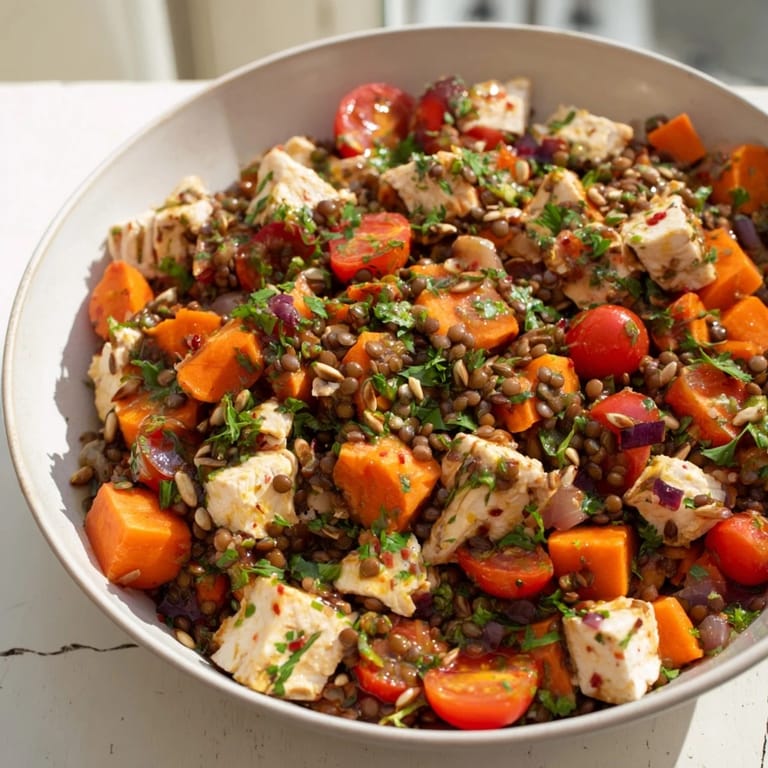
Pin There's something quietly defiant about making a salad from the pantry staples that have seen you through tight months. I was standing in my kitchen on a January morning, the kind where the fridge felt emptier than usual, when I spotted the bag of lentils I'd bought on sale and remembered the rotisserie chicken from the night before. That combination sparked something—not just necessity, but a realization that the best meals sometimes come together when you stop overthinking and start trusting what's already in your hands.
I brought this to a potluck once, nervous because it looked humble next to everyone else's dishes, but it was the first thing to disappear. People came back asking for seconds, and one friend admitted she'd been eating salads that felt like obligations—this one felt like an actual choice. That's when I understood that sometimes the most satisfying food isn't complicated, it's just honest.
Ingredients
- Cooked chicken breast: Two cups shredded or diced—rotisserie works beautifully here if you want to skip cooking, or use canned chickpeas if you're going vegetarian and want that same hearty protein base.
- Brown or green lentils: One cup dried, or two and a half cups already cooked—they're the backbone of this salad, earthy and substantial in a way that makes you feel full without being heavy.
- Cherry tomatoes: One cup halved, their acidity balancing the richness of the oil and keeping every bite bright.
- Cucumber: One cup diced, adding that crisp coolness that makes you want another bite.
- Red onion: Half a cup finely diced, sharp and slightly sweet when it sits with the dressing.
- Carrot: Half a cup grated, for natural sweetness and a subtle textural contrast.
- Fresh parsley: Quarter cup chopped, a whisper of freshness that reminds you this came from the earth.
- Extra virgin olive oil: Four tablespoons, the kind that smells like green grass and summer even in winter.
- Lemon juice: Two tablespoons, the acid that pulls everything together and makes it sing.
- Dijon mustard: One tablespoon, a small amount that adds depth without announcing itself.
- Garlic clove: One minced, raw and honest in the dressing.
- Salt and black pepper: Half teaspoon and quarter teaspoon respectively, the foundation of flavor.
- Feta cheese and sunflower seeds: Optional, but they both add something—the feta brings a salty tang, the seeds add a toasted crunch that makes it feel less austere.
Tired of Takeout? 🥡
Get 10 meals you can make faster than delivery arrives. Seriously.
One email. No spam. Unsubscribe anytime.
Instructions
- Rinse and simmer the lentils:
- Place a cup of dried lentils under cold running water, stirring them gently—this removes dust and rinses away the starch. Drop them into a saucepan of cold water, bring to a boil, then immediately turn the heat down to a gentle simmer where you just see small bubbles breaking the surface, and let them cook for twenty to twenty-five minutes until they're tender but still hold their shape when you press one between your fingers.
- Build the dressing while things cool:
- Whisk together the olive oil, lemon juice, Dijon mustard, minced garlic, salt, and pepper in a small bowl until it looks emulsified and tastes like it's missing only the vegetables to complete it. Taste it straight—it should make you pucker slightly from the lemon and feel balanced, not overwhelmingly salty.
- Combine everything in one bowl:
- Once the lentils have cooled completely, toss them into a large bowl with the chicken, tomatoes, cucumber, onion, carrot, and parsley, creating a base of color and texture. Pour the dressing over everything and toss gently so nothing gets bruised, using your hands if you need to make sure every lentil gets dressed.
- Let it sit and marry:
- Chill for at least thirty minutes—this is crucial, not because of food safety, but because the flavors need time to become friends. The acidity will soften the vegetables slightly, the lentils will absorb the dressing, and it will taste exponentially better than it did when you first tossed it.
- Top and taste before serving:
- If you're using feta and sunflower seeds, scatter them over just before serving so they stay crisp. Give it one final taste and adjust the lemon or salt if it needs it—dressings settle differently depending on how you've stored your ingredients.
 Pin
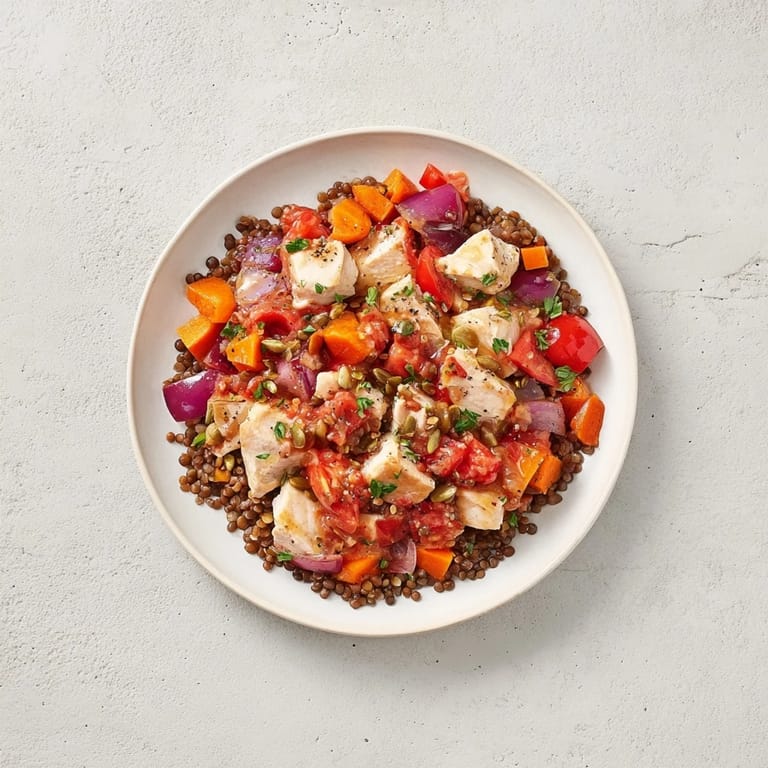
Pin My favorite version of this salad was served to me cold from a container at an outdoor picnic in March, and I remember being struck by how something so humble could feel luxurious when shared under trees just beginning to leaf out. Food does that sometimes—it carries the moment it's eaten in, and this one carries ease.
Why This Salad Became a Keeper
There's a shift that happens in the kitchen when you stop thinking of food as an expense and start thinking of it as an investment in how you feel for the next three days. This salad sits at that crossroads—it costs almost nothing to make, requires almost no skill, and tastes better the longer it sits in your fridge. I started making it during stretches when money was tight, and I kept making it long after things loosened up, which tells me something about recipes that are both humble and genuinely delicious.
Serving and Pairing Ideas
I've served this salad as the main event at lunch and as a side at dinner, and it works equally well in both contexts. It pairs beautifully with crusty whole-grain bread if you want to make it a full meal, or over a bed of leafy greens if you want it lighter. A crisp white wine like Sauvignon Blanc cuts through the richness of the oil and echoes the brightness of the lemon, though honestly, this salad tastes just as good with cold water on a hot day.
Making It Your Own
The architecture of this salad is flexible enough that you can build it differently depending on what you have and what you're craving. I've added diced bell peppers for color, sliced avocado for richness, and crispy chickpeas for extra crunch—each version felt right at the moment I made it. The dressing is where the real magic happens, so if you're going to be intentional about anything, be intentional about tasting and adjusting the lemon and salt until it feels alive on your tongue.
- Rotisserie chicken saves time if you don't have leftovers, or use canned chickpeas to make it completely vegetarian without losing any heartiness.
- Keep the salad in a sealed container and it will last four to five days, getting better each day as the flavors deepen and the lentils absorb more dressing.
- Add cheese and seeds just before serving if you want them to stay crisp, or mix them in if you prefer them to soften and integrate with everything else.
 Pin
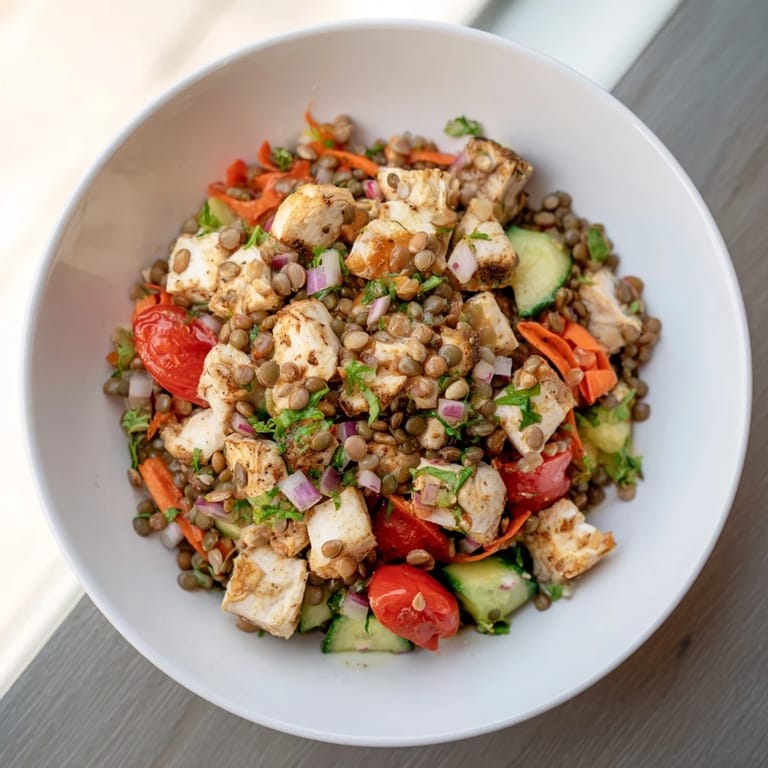
Pin This is the kind of salad that proves you don't need much to make something nourishing and genuinely satisfying. It's become one of those recipes I return to again and again, not because it's impressive, but because it never disappoints.
Recipe FAQ
- → How are the lentils prepared for the salad?
Rinse lentils well, then simmer them in water for 20–25 minutes until tender but firm. Drain and let cool before adding to the salad.
- → Can I substitute the chicken with a vegetarian alternative?
Yes, canned chickpeas work well as a plant-based protein alternative without compromising texture or flavor.
- → What dressing ingredients enhance this salad's flavor?
The dressing combines extra virgin olive oil, lemon juice, Dijon mustard, garlic, salt, and black pepper for a bright, balanced finish.
- → Are there any optional add-ins for extra texture?
Crumbled feta cheese and toasted sunflower seeds add both creaminess and crunch if desired.
- → How long should the salad chill before serving?
Chilling for at least 30 minutes allows the flavors to blend and the salad to cool for best enjoyment.