 Pin
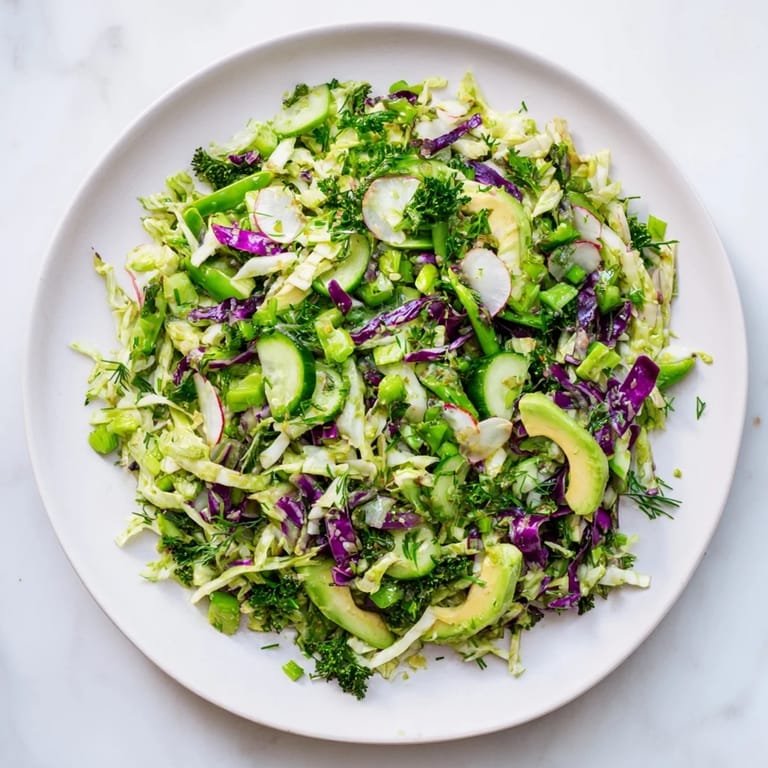
Pin I discovered this salad on a Monday morning when my kitchen felt a bit too quiet and my body was asking for something bright. There was a bag of mixed greens going soft in the crisper, and instead of tossing them, I started shredding everything in sight—cabbage, kale, whatever looked promising—and suddenly my cutting board was a garden of color. That first bite, with the lemon dressing hitting the crispness of raw vegetables, felt like pressing pause on everything hectic. It became the thing I make when I need to reset.
My partner once asked why I made this salad so often, and I realized it's because it never feels like an obligation. When friends came over unexpectedly one spring evening, I had this assembled in the time it took to chill the wine glasses. Everyone asked for the recipe, but more than that, they asked how the vegetables stayed so crisp, how the dressing didn't make it soggy. It became the salad I'm known for now, the one people request.
Ingredients
- Green cabbage (4 cups, finely shredded): This is your base, and shredding it fine matters because it becomes tender without being mushy, creating the perfect canvas for everything else.
- Purple cabbage (1 cup, finely shredded): The jewel of this salad—it adds earthiness and a subtle sweetness that balances the acid in the dressing.
- Kale (1 cup, stems removed, thinly sliced): Make sure you remove those woody stems or you'll be chewing on something unpleasant; the leaves themselves become surprisingly delicate when dressed.
- Cucumber (1 large, thinly sliced): This brings coolness and lightness, but slice it thin so it absorbs the flavors rather than sitting separate.
- Sugar snap peas (1 cup, sliced): These stay snappy and give you little bursts of natural sweetness that keep things interesting.
- Avocado (1, diced): Add this right before serving because oxygen turns it brown fast, and it's the creaminess that makes this salad feel indulgent.
- Fresh parsley and dill (1/2 cup and 1/4 cup): These herbs are not garnish here—they're the backbone of the flavor profile, so don't skimp or use dried.
- Green onions (2, thinly sliced): A quiet addition that adds a mild onion bite without overwhelming anything else.
- Radishes (1/4 cup, thinly sliced): If you want to skip something, don't skip these; they provide a sharp peppery note that keeps the whole salad awake.
- Extra virgin olive oil (1/4 cup): This is your luxury item; use something good because it's doing the heavy lifting in the dressing.
- Fresh lemon juice (3 tablespoons): Squeeze it fresh; bottled lemon juice will make you sad about what you created.
- Apple cider vinegar (1 tablespoon): This adds depth that regular vinegar can't touch, with an almost fruity note.
- Dijon mustard (1 teaspoon): The secret ingredient that makes the dressing emulsify and cling to the vegetables instead of pooling at the bottom.
- Garlic (1 clove, minced): Raw garlic can be sharp, so mince it fine and let the dressing sit a moment before serving so it mellows slightly.
- Fresh chives and tarragon (1 tablespoon each, chives required, tarragon optional): Chives are essential; tarragon adds an anise-like sophistication if you have it.
- Sea salt and black pepper (1/2 teaspoon and 1/4 teaspoon): Taste as you go because the vegetables will release their own moisture and dilute the saltiness.
Tired of Takeout? 🥡
Get 10 meals you can make faster than delivery arrives. Seriously.
One email. No spam. Unsubscribe anytime.
Instructions
- Prepare your vegetables with intention:
- Shred the cabbages and kale on a cutting board—there's something meditative about the repetitive motion. Slice the cucumber, peas, and radishes thin enough that they'll absorb the dressing but thick enough that they keep their structure.
- Combine everything in the bowl:
- Layer your vegetables as you go—don't just dump them in a heap. This isn't just practical; watching the colors mingle reminds you why you started.
- Build your dressing with care:
- In a separate bowl, whisk the olive oil, lemon juice, vinegar, and mustard together slowly so the mustard emulsifies and the oil doesn't separate. Add the minced garlic, chives, tarragon if using, salt, and pepper.
- Taste the dressing before committing:
- It should make your mouth water immediately, with a brightness that cuts through the richness of the oil. Adjust the acid or salt now because once it's on the salad, you're committed.
- Dress and let it breathe:
- Pour the dressing over the salad and toss thoroughly—every vegetable should glisten. Let it sit for 5 to 10 minutes so the cabbage softens slightly and flavors begin their conversation.
- Add the avocado as a final gesture:
- Dice it fresh and scatter it on top just before serving, so it stays creamy and doesn't turn that disappointing gray-brown.
- Taste and adjust one final time:
- A pinch more salt, a squeeze more lemon—trust your mouth. Serve immediately while everything is still crisp and alive.
 Pin
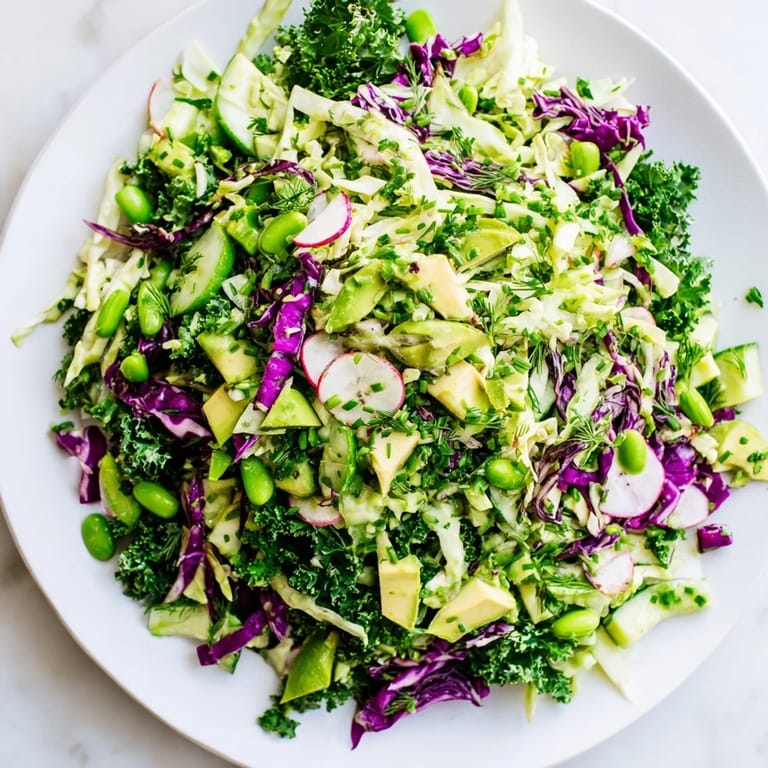
Pin There was a moment, maybe the fifth time I made this, when I realized I wasn't following the recipe anymore—I was improvising. Some days I added sunflower seeds because I had them; other times I swapped half the kale for baby spinach because that's what felt right. That's when I understood this salad wasn't a formula to follow; it was a structure to build on.
Building Flexibility Into Freshness
The beauty of this salad is that it survives adaptation beautifully. Kale too bitter for your mood? Spinach works. Want more substance? A handful of roasted chickpeas or seeds adds texture without weighing anything down. The dressing is sturdy enough to carry new vegetables—think shredded carrots, sliced bell peppers, or even thinly shaved celery. I've made this salad in a hundred different ways, and not a single version disappointed me. The core—bright acid, fresh herbs, good oil, crisp vegetables—stays the same, but everything else can shift with your kitchen, your mood, and what needs eating.
The Science of Staying Crisp
There's a reason this salad doesn't wilt into sadness the way some raw vegetable dishes do: it's about the vegetables themselves and how they're cut. Raw cabbage has a waxy cuticle that resists the dressing pooling around it, keeping it crisp for hours. Shredding thin means more surface area for flavor absorption without sacrificing structure. The sugar snap peas and radishes have their own built-in crunch that survives the dressing because their cell walls are sturdy. I learned this by accident, watching this salad last through an entire afternoon at a picnic when I thought it would turn soggy by hour two. If you want maximum longevity, save the avocado and the herbs for the moment of serving—everything else can sit happily together.
Why This Became My Weeknight Anchor
On nights when cooking feels like another obligation, this salad reminds me why I started cooking in the first place. It takes twenty minutes from cutting board to plate. It makes your kitchen smell green and alive. It never tastes like obligation or health-conscious compromise—it tastes like something you genuinely wanted to eat. I serve it alongside grilled chicken, or fish, or sometimes just with bread and cheese, and it transforms a meal from something functional into something worth sitting down for. That might sound like overstating a salad, but it's the kind of dish that proves you don't need complicated or time-consuming to make something memorable.
- Keep your knife sharp because dull knives bruise vegetables and make them weep into the dressing.
- Taste every component—dressing, vegetables, the finished dish—because your palate is the best judge of balance.
- Make this when you have access to genuinely fresh herbs; they're what turn this from generic to unforgettable.
 Pin
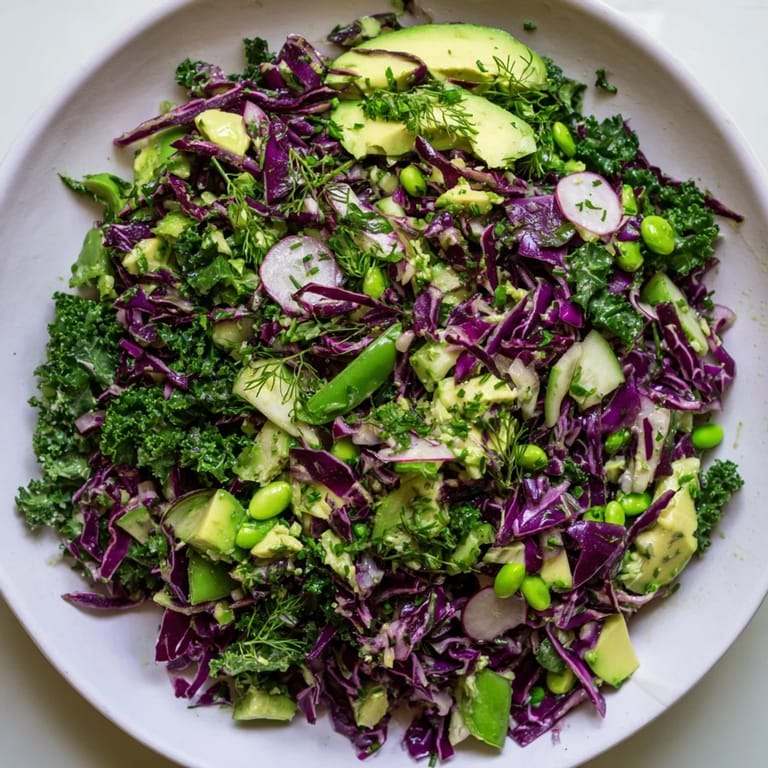
Pin This salad taught me that the simplest recipes often hold the most possibility. Make it once following the recipe, then make it yours.
Recipe FAQ
- → Can I prepare this salad in advance?
Yes, the salad can be made up to two hours ahead. Add avocado just before serving to maintain freshness and prevent browning.
- → What can I substitute for kale?
Baby spinach is a great alternative if you prefer a milder leaf or a softer texture.
- → How do I enhance the crunch in this salad?
Adding roasted sunflower or pumpkin seeds provides extra crunch and complements the fresh vegetables nicely.
- → Is the dressing easy to emulsify?
Yes, whisking the olive oil with lemon juice, vinegar, and mustard creates a smooth, well-blended dressing that coats the vegetables evenly.
- → What dishes pair well with this salad?
This salad pairs beautifully with grilled fish or chicken, offering a light and balanced meal.