 Pin
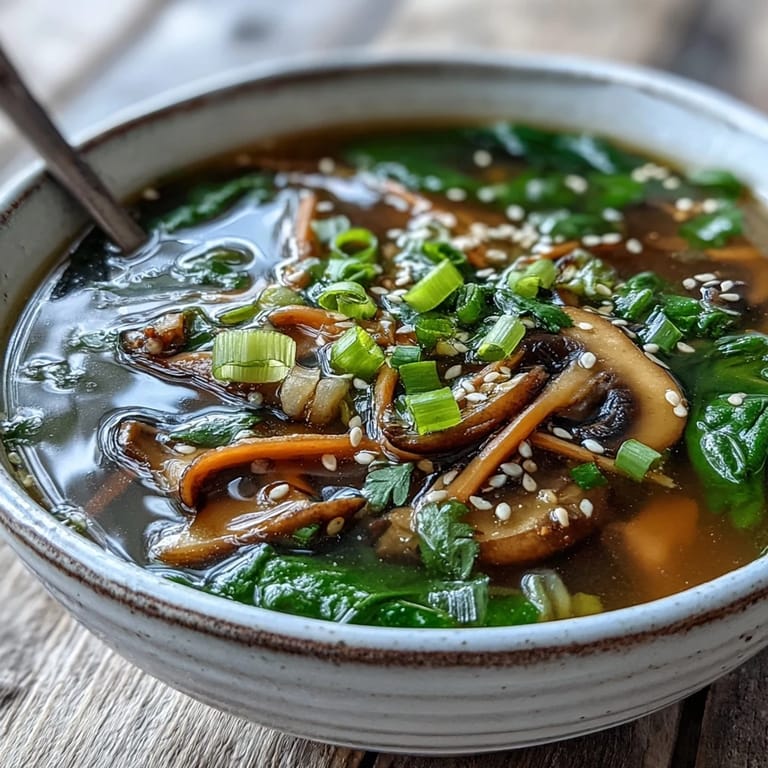
Pin When the cold weather arrives, this Miso Ginger Winter Soup offers a light and restorative way to stay nourished. Featuring the warming properties of fresh ginger and the probiotic benefits of miso, it is a healthy, Japanese-inspired meal that is both comforting and incredibly simple to prepare.
Pin The foundation of this soup is a savory vegetable broth infused with aromatic garlic and ginger. By simmering these aromatics, you create a depth of flavor that complements the earthy shiitake mushrooms and crisp carrots, resulting in a perfectly balanced winter dish.
Ingredients
Tired of Takeout? 🥡
Get 10 meals you can make faster than delivery arrives. Seriously.
One email. No spam. Unsubscribe anytime.
- Broth: 6 cups (1.5 L) low-sodium vegetable broth, 2-inch piece fresh ginger (peeled and thinly sliced), 2 cloves garlic (thinly sliced), 2 tablespoons white or yellow miso paste.
- Vegetables: 1 cup shiitake mushrooms (thinly sliced), 1 cup baby spinach or bok choy (roughly chopped), 1 medium carrot (julienned or thinly sliced), 2 green onions (sliced).
- Garnish: 1 tablespoon toasted sesame seeds, 1 tablespoon chopped fresh cilantro (optional), 1 teaspoon chili oil or a pinch of red pepper flakes (optional).
Instructions
- Step 1: Simmer Broth
- In a large saucepan, bring the vegetable broth to a gentle simmer over medium heat.
- Step 2: Infuse Aromatics
- Add the sliced ginger and garlic. Simmer for 10 minutes to infuse the broth.
- Step 3: Cook Vegetables
- Add the mushrooms and carrot. Cook for 5 minutes until just tender.
- Step 4: Prepare Miso
- Remove a ladleful of hot broth and whisk with the miso paste in a small bowl until smooth.
- Step 5: Incorporate Miso
- Reduce the soup heat to low. Stir the miso mixture back into the pot. Important: do not boil after adding miso to preserve its healthy probiotics.
- Step 6: Wilt Greens
- Add the spinach or bok choy and green onions. Stir until wilted, about 1 minute.
- Step 7: Season
- Taste and adjust seasoning with more miso or a splash of soy sauce if desired.
- Step 8: Serve
- Ladle into bowls and top with sesame seeds, cilantro, and chili oil or flakes if using.
Zusatztipps für die Zubereitung
To ensure a smooth consistency, always use a small bowl and whisk to dissolve the miso paste before adding it back to the saucepan. Using a large saucepan allows the ingredients to cook evenly, while keeping the heat low after adding the miso ensures you retain all the probiotic benefits of the paste.
Varianten und Anpassungen
This soup is highly adaptable. You can add cubed silken tofu for extra protein or include soba or udon noodles for a heartier, more filling meal. If you prefer a more robust flavor, substitute red miso for the white or yellow variety, and feel free to use other greens like kale if spinach is unavailable.
Serviervorschläge
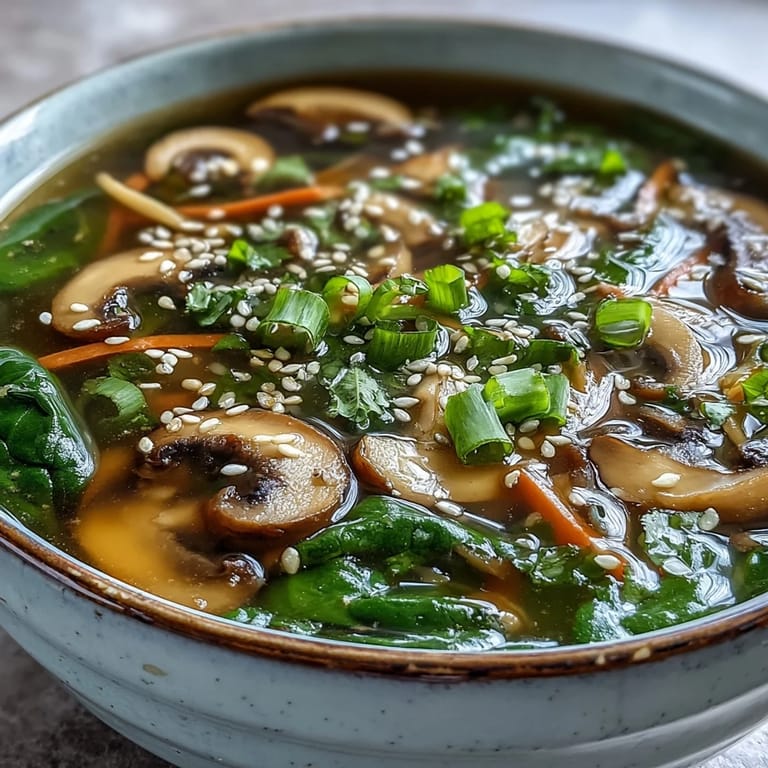
Serve this soup in deep bowls, garnished generously with toasted sesame seeds and fresh cilantro. If you enjoy a bit of heat, a drizzle of chili oil or a sprinkle of red pepper flakes adds the perfect finishing touch to this warming winter dish.
 Pin
Pin This Miso Ginger Winter Soup is an excellent addition to your cold-weather rotation. Nourishing, flavorful, and incredibly light at only 90 calories per serving, it provides a gentle way to support your well-being throughout the winter season.
Recipe FAQ
- → Can I boil the soup after adding miso?
No, avoid boiling after adding miso paste. High heat destroys the beneficial probiotics. Keep the temperature at a gentle simmer or remove from heat entirely when incorporating the miso mixture.
- → What vegetables work best in this soup?
Shiitake mushrooms, carrots, spinach, and bok choy are classic choices. You can also add kale, Swiss chard, snap peas, or cubed silken tofu for extra protein.
- → How do I store leftovers?
Store in an airtight container in the refrigerator for up to 3 days. Reheat gently over low heat, taking care not to boil to preserve the miso's beneficial enzymes.
- → Can I make this soup gluten-free?
Yes, simply verify that your miso paste and vegetable broth are certified gluten-free. Most traditional miso is naturally gluten-free, but some brands add barley or wheat.
- → How can I add more protein?
Add cubed silken tofu during the last 2 minutes of cooking, or serve with cooked soba or udon noodles. Edamame or cooked chicken also work well if you prefer additional protein sources.
- → What's the difference between white and red miso?
White miso has a milder, slightly sweet flavor and ferments for a shorter time. Red miso is aged longer, developing a deeper, richer taste. Either works beautifully in this soup depending on your preference.