 Pin
Pin I'll never forget the first time I arranged vegetables in a spiral on a plate. It was at a small dinner party where I wanted to impress without spending hours in the kitchen. I remembered a technique from a cooking class I'd taken years ago, and suddenly it clicked—what if I created something that was both a work of art and genuinely delicious? That night, the Snail Shell Spiral was born, and watching my guests' faces light up when they saw it made me realize that sometimes the most memorable dishes are the ones that catch the eye before they ever reach the mouth.
I remember preparing this for a summer lunch with friends who always worried about being "too much trouble." When I casually plated this elegant spiral while chatting and laughing, they realized that beautiful food doesn't have to mean complicated food. One friend even asked for the recipe, and I loved telling her that the magic was really just in the arrangement—in taking simple vegetables and treating them with intention.
Ingredients
- Eggplant, thinly sliced lengthwise: Choose a small one so your slices stay tender and cook evenly. The lengthwise cut gives you those beautiful long strands that wrap perfectly in a spiral
- Zucchini, thinly sliced lengthwise: A mandoline is your friend here—it keeps the thickness consistent and your knuckles safe. Look for a medium zucchini that's firm and unblemished
- Red bell pepper, seeded and thinly sliced: The red provides a gorgeous pop of color. Slice it as thin as the other vegetables so it softens at the same rate
- Yellow squash, thinly sliced lengthwise: This adds brightness to your spiral and a gentle sweetness when roasted
- Carrot, peeled and thinly sliced lengthwise: Raw carrots would be tough, so roasting is essential. The natural sugars concentrate and make it a delicate sweet layer
- Goat cheese, softened: Let it come to room temperature for at least 30 minutes so it spreads like butter. This is your edible glue and flavor foundation
- Crème fraîche: This keeps the cheese mixture creamy and prevents it from being too dense. It adds a subtle tang that balances the earthy vegetables
- Fresh basil leaves, finely chopped: Tear or chop just before using—this preserves the bright, anise-like flavor. Basil and vegetables are old friends
- Fresh thyme leaves: Strip them from the stems with your fingers. Just a tablespoon is enough—thyme is powerful and woodsy
- Olive oil: Use a good quality oil you'd happily drizzle on finished dishes. It's not just for roasting; it's part of the flavor profile
- Sea salt and freshly ground black pepper: Season as you go rather than all at once. You'll taste the difference between pre-ground and freshly cracked pepper
- Pine nuts, lightly toasted: Toast them yourself in a dry pan for 2-3 minutes until fragrant. They add a buttery crunch that feels luxurious
- Microgreens (optional): A finish touch that adds peppery freshness and makes every plate feel special
Tired of Takeout? 🥡
Get 10 meals you can make faster than delivery arrives. Seriously.
One email. No spam. Unsubscribe anytime.
Instructions
- Set your stage:
- Preheat your oven to 200°C (400°F) and line a baking tray with parchment paper. Taking this moment to prepare everything makes the actual cooking feel effortless
- Oil and season your vegetables:
- Lightly brush each vegetable slice with olive oil—think of it as giving them a gentle massage that helps them roast evenly. A whisper of salt and pepper at this stage makes all the difference
- Roast until pliable:
- Spread the vegetables in a single layer on your tray and roast for 10–12 minutes. You want them soft enough to bend without cracking, but still holding their shape and color. The vegetables should feel like silk ribbons when you handle them. Let them cool slightly so you don't burn your fingers arranging them
- Make your cheese foundation:
- Mix softened goat cheese with crème fraîche, chopped basil, and thyme in a bowl until it's completely smooth. Taste it—the flavors should whisper to you, not shout. This is the heart of your dish
- Create the spiral:
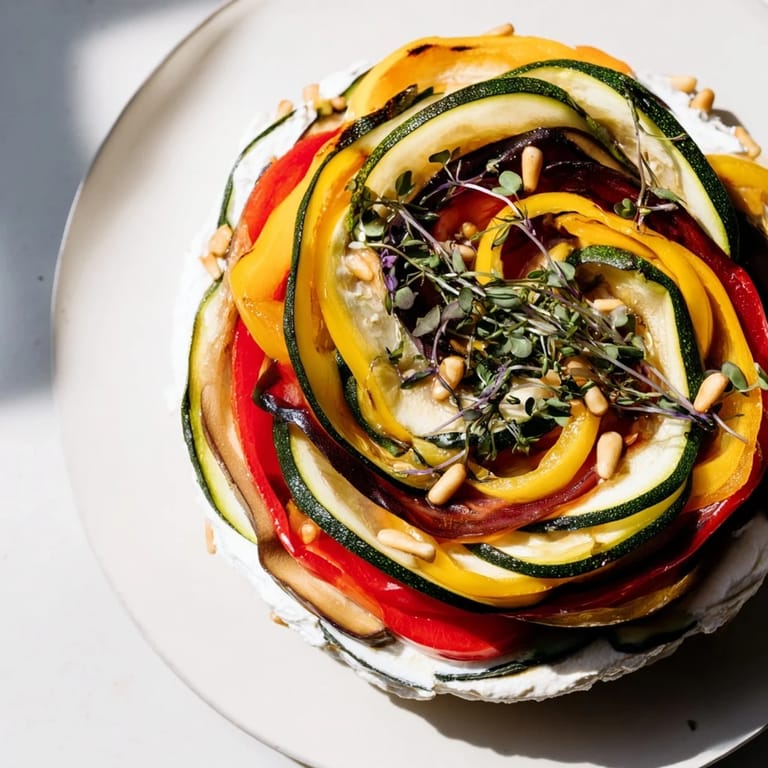
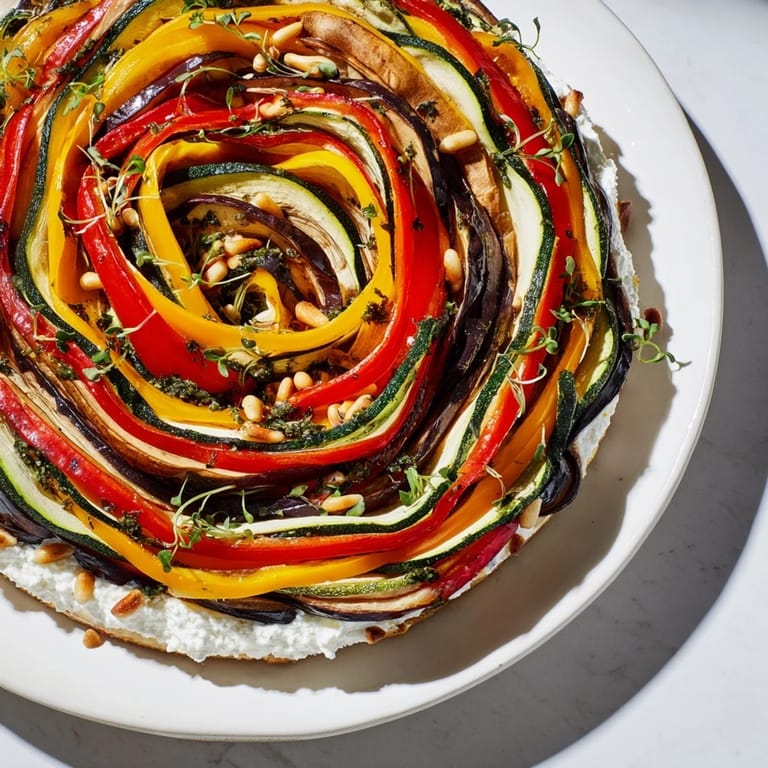
- On your serving plate, start at the very center and spread a thin, even layer of the cheese mixture in a continuous spiral, moving outward like a snail shell. Take your time here; this is where the magic happens
- Arrange the vegetables:
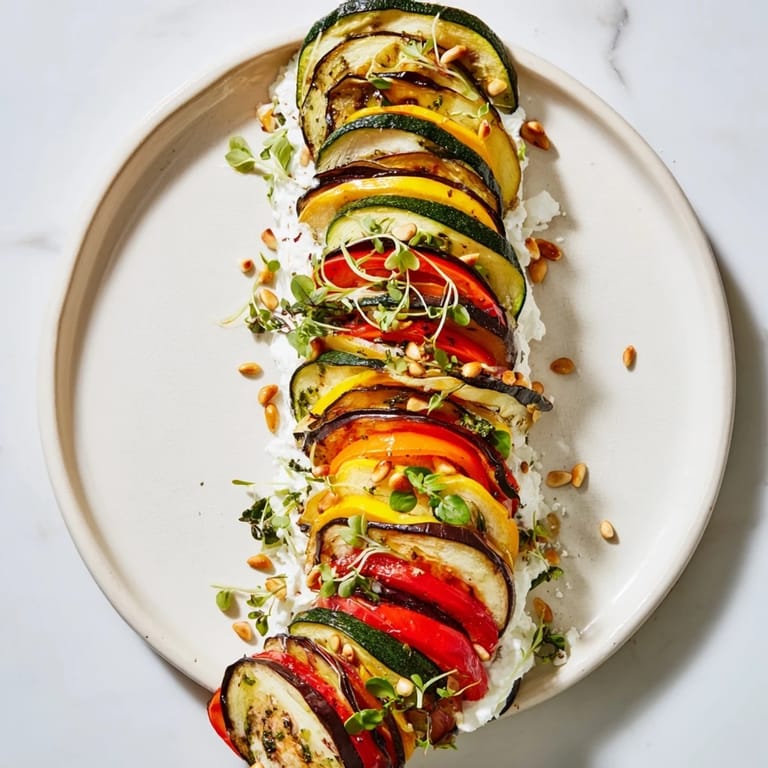
- Beginning at the center where you started the cheese spiral, layer the roasted vegetable slices over it, overlapping them slightly as they wind outward. Alternate the colors intentionally—eggplant, then yellow squash, then zucchini, then carrot, then red pepper—so your spiral looks like a painter's palette come to life. Each overlapping slice should reveal about half of the one before it
- Finish and serve:
- Scatter toasted pine nuts across the spiral and add microgreens if you're using them. Serve at room temperature so every flavor can shine. Room temperature is important—it lets the goat cheese stay creamy and the vegetables taste more like themselves
 Pin
Pin There was a moment during that summer lunch when someone took their first bite and their eyes closed for just a second. They said, "You know, I always thought food this pretty couldn't actually taste good." That's when I understood—this spiral isn't about showing off. It's about saying to the people you cook for that they're worth the extra moment of care, that beauty and deliciousness can exist on the same plate.
Variations to Personalize Your Spiral
This recipe is a canvas waiting for your signature. I've found that roasted beets add an earthy, jewel-toned layer that makes the whole spiral feel autumnal and rich. Sweet potato slices bring warmth and a subtle caramel note. One autumn, I added very thin slices of roasted apple for sweetness, and it transformed the dish into something that felt almost dessert-like. The structure stays the same; you're just changing the colors and flavors within it. The beauty of the spiral is that it invites experimentation while still maintaining its elegant form.
Pairing Suggestions and Serving Ideas
I serve this alongside crusty bread or water crackers to let people build little bites if they want, or I keep it as a standalone appetizer that leaves room for a main course. A crisp white wine—something like Sauvignon Blanc or a young Albariño—cuts through the richness of the goat cheese beautifully. I've also served it as part of a vegetable-forward lunch with a simple green salad, and it becomes the showstopper that makes everyone ask for the recipe. The key is not overthinking it. Let the spiral be the star.
Making It Your Own
For a vegan version, I've had great success with a plant-based cheese spread mixed with nutritional yeast for umami depth—it's surprisingly close to the richness of goat cheese. If you have guests with nut allergies, skip the pine nuts and instead finish with toasted pumpkin seeds for that same buttery crunch. The beautiful thing about this dish is that it adapts without losing its soul.
- Always taste your cheese mixture before spiraling—adjust the salt and herbs if needed, because once it's on the plate, it's harder to fix
- Make this up to 4 hours ahead and cover it loosely with plastic wrap. The flavors actually meld and deepen as it sits
- If you're serving a crowd, you can assemble multiple spirals on one large platter for a truly stunning centerpiece
 Pin
Pin Cooking this spiral reminds me why I love food—it's not just about nourishing the body, but about creating a moment where people feel cared for and delighted. This dish does exactly that.
Recipe FAQ
- → Can I prepare the vegetables ahead of time?
Yes, you can slice and roast the vegetables a few hours before assembling to save time, just store them covered to maintain moisture.
- → What can I substitute for goat cheese?
A plant-based cheese spread works well for a dairy-free option, maintaining the creamy texture and mild tang.
- → How should I arrange the spiral for best effect?
Start from the center spreading the cheese blend, then place overlapping vegetable slices in alternating colors, creating a smooth, continuous spiral.
- → Is it better served warm or at room temperature?
Room temperature highlights the flavors and textures best, making it ideal as a light and elegant starter.
- → Can I add other vegetables or nuts?
Yes, thinly sliced roasted beets or sweet potatoes add color and flavor, while toasted pine nuts provide a pleasant crunch.