 Pin
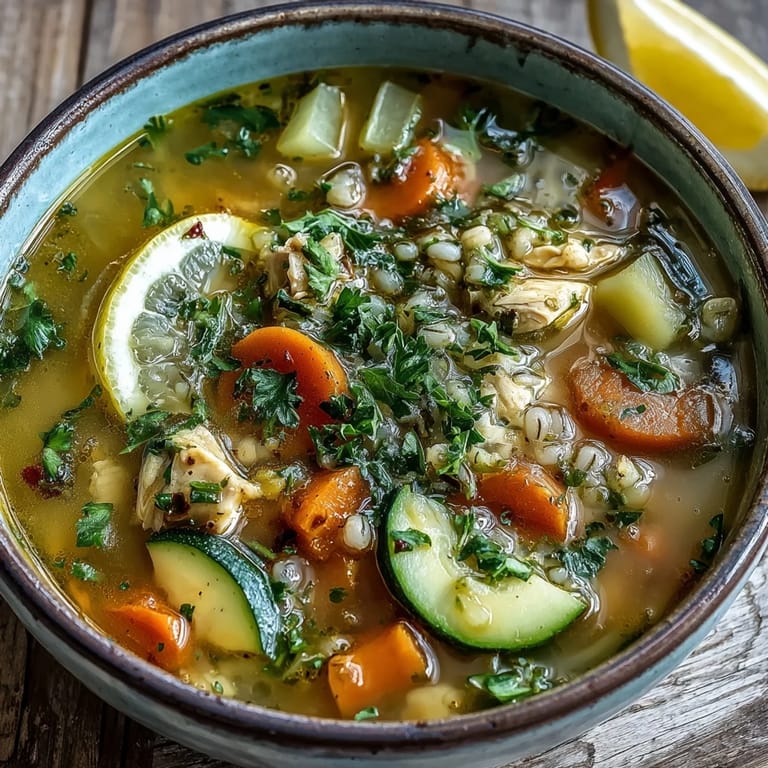
Pin There's something almost magical about the moment turmeric hits a hot pan—that golden bloom of spice that fills your kitchen with warmth before a single drop of broth goes in. I discovered this soup on a gray Tuesday afternoon when I was searching for something that felt both nourishing and deeply comforting, not the rushed kind of cooking but the sort that invites you to slow down. The pearl barley gives it an unexpected heartiness, and somehow the turmeric makes everything taste like it's been simmering with intention.
I made this for a friend who was going through one of those seasons where everything felt uncertain, and watching her face when she tasted it—how she closed her eyes for just a moment—reminded me that sometimes the most healing thing we can offer is something warm and thoughtfully made. She asked for the recipe that same evening, and now it's become our unspoken language for checking in on each other.
Ingredients
- Boneless, skinless chicken breasts: Dicing them yourself rather than buying pre-cut ensures they stay tender and soak up the broth beautifully.
- Pearl barley: Rinsing it first removes excess starch and keeps the soup from becoming cloudy, plus it adds a subtle nuttiness as it cooks.
- Carrots and celery: These are your flavor foundation—don't skip them even if you're in a hurry, as they build the soup's soul.
- Yellow onion: The sweetness balances turmeric's earthiness, so don't swap it for red onion or white.
- Garlic cloves: Minced fine rather than sliced means they dissolve into the broth and distribute their flavor evenly.
- Zucchini: Add it later so it stays slightly tender rather than turning to mush, which keeps each spoonful interesting.
- Low-sodium chicken broth: This gives you control over the salt level and lets the other flavors shine without being masked.
- Ground turmeric: The star of the show—it's not just flavor, it's the reason this soup feels both ancient and modern.
- Ground cumin: A whisper of earthiness that deepens without announcing itself.
- Dried thyme: Just enough to remind you of herb gardens without overpowering.
- Sea salt and black pepper: Essential for tasting at the end, because this soup wants to be seasoned to your preferences, not the recipe's.
- Fresh parsley and lemon wedges: These finishing touches are not optional—they brighten everything and add a final layer of freshness that makes people ask for seconds.
Tired of Takeout? 🥡
Get 10 meals you can make faster than delivery arrives. Seriously.
One email. No spam. Unsubscribe anytime.
Instructions
- Build your flavor base:
- Heat the olive oil in your pot over medium heat and let it shimmer slightly before adding onion, carrots, and celery. You want them to soften and sweeten, not brown, so give them about five minutes and listen for that gentle sizzle. This is where patience pays off—rushing this step means missing the foundation that makes everything taste intentional.
- Bloom the spices:
- Once your vegetables are tender, add the garlic, turmeric, cumin, and thyme. The moment they hit the pan, breathe in—that's the signal they're releasing their oils and waking up. Stir constantly for about a minute until the aroma nearly lifts you off your feet, then move forward.
- Add the chicken:
- Push your vegetables to the sides and add the diced chicken pieces to the center of the pan, letting them make contact with the hot surface. Stir occasionally for two to three minutes until they've lost their raw pink exterior and the color begins to turn opaque and golden.
- Pour in the broth and barley:
- This is the moment the soup comes together—the broth will immediately mix with all those spices clinging to the pan, creating liquid gold. Add the rinsed pearl barley, salt, and pepper, stirring to combine and making sure nothing sticks to the bottom.
- Simmer low and slow:
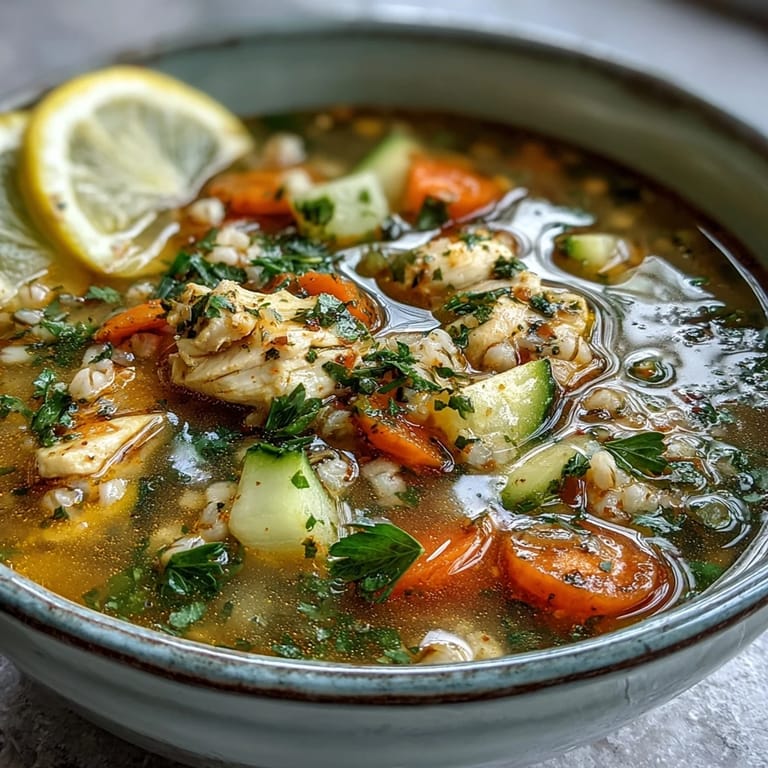
- Bring everything to a gentle boil, then turn the heat down to low and cover the pot. Let it bubble quietly for thirty-five minutes, stirring occasionally so the barley cooks evenly and the flavors marry together. You'll notice the broth turning deeper golden as the barley releases its starch.
- Finish with zucchini:
- Add the diced zucchini, cover again, and give it another ten to fifteen minutes until the barley is tender but not mushy and the chicken is completely cooked through. The zucchini should still have a little structure to it.
- Taste and serve:
- Take a spoonful, blow on it, and really taste it. This is your moment to adjust the salt or add more pepper if it needs it. Ladle into bowls, top with fresh parsley, and serve with lemon wedges on the side so everyone can brighten their own bowl.
 Pin
Pin There's a moment late in the cooking when you take the lid off and the steam rises up, and you realize you've created something that smells like comfort. That's when you know it's going to be good.
The Magic of Turmeric in Everyday Cooking
Turmeric gets talked about a lot as a superfood, but what drew me to it first was simply how it transforms a pot of broth into something that looks like liquid sunshine. The earthy, slightly warm flavor deepens as it simmers, and unlike some trendy ingredients, it genuinely tastes good rather than feeling like medicine. In this soup, it's not trying to be exotic—it's just there, doing the quiet work of making everything taste more like itself.
Why Pearl Barley Changes Everything
Most soups rely on noodles or rice for texture, but pearl barley brings something different to the table—a subtle chewiness and a nutty undertone that makes each spoonful feel substantial without being heavy. When it cooks, it releases starches that slightly thicken the broth naturally, giving the soup body without cream or roux. I've tried this with other grains, and while they work fine, the barley is what makes this soup feel like it was meant to be exactly this way.
Variations and Flexibility
This soup is forgiving in the best way—it adapts to what you have without losing its identity. Fresh spinach or kale stirred in during the last five minutes adds color and earthiness, while chickpeas can replace the chicken entirely if you're cooking vegetarian. Some people add a splash of white wine to deepen the flavor, others include fresh ginger, and I once made it with roasted root vegetables because that's what winter had left me. The turmeric and barley are what anchor it, so as long as those stay, you're building something real.
- For extra creaminess without dairy, blend a handful of the cooked barley and broth before serving, then stir it back in.
- Crusty bread isn't just a pairing—it's essential for soaking up the last golden drops at the bottom of the bowl.
- This soup freezes beautifully for up to three months, making it perfect for moments when you need something warm but can't cook.
 Pin
Pin This soup exists in that perfect space where it's simple enough to make on a Tuesday but feels special enough to serve to people you care about. Once you make it, you'll understand why it keeps getting requested.
Recipe FAQ
- → What makes this soup golden-colored?
The vibrant golden hue comes from ground turmeric, which not only provides beautiful color but also adds warm, earthy flavor and anti-inflammatory benefits.
- → Can I make this ahead of time?
Absolutely. This soup actually tastes better the next day as flavors have time to meld. Store in the refrigerator for up to 4 days and reheat gently on the stove.
- → What can I substitute for pearl barley?
You can use farro, brown rice, or quinoa instead. Keep in mind cooking times may vary—quinoa cooks faster while farro may take slightly longer.
- → Is this soup freezer-friendly?
Yes, it freezes well for up to 3 months. Cool completely before transferring to freezer-safe containers. Thaw overnight in the refrigerator before reheating.
- → How can I add more vegetables?
Feel free to add other vegetables like bell peppers, green beans, or spinach. Stir in delicate greens like spinach during the last 5 minutes of cooking.
- → Can I use chicken thighs instead?
Chicken thighs work wonderfully and add extra richness. Just be sure to trim excess fat and adjust cooking time as needed—thighs may take slightly longer to cook through.