 Pin
Pin I'll never forget the first time I created this tropical fruit platter for a summer dinner party. My friend had just returned from Hawaii and was describing the vibrant fruit markets there, and I thought, why not bring that island paradise right to my kitchen? That evening, as I carved into a fresh pineapple and arranged those jewel-toned fruits around it, something magical happened—the platter became a centerpiece that made everyone's eyes light up before they even tasted it. Now, whenever I want to feel transported to warmer shores or impress guests without any cooking stress, I return to this beautifully simple arrangement.
I remember making this for my sister's engagement party, and what struck me most wasn't just how stunning it looked on the table—it was watching people's faces light up as they discovered each different fruit, mixing and matching flavors. One guest told me it felt like eating a vacation, and honestly, that's exactly what I was going for.
Ingredients
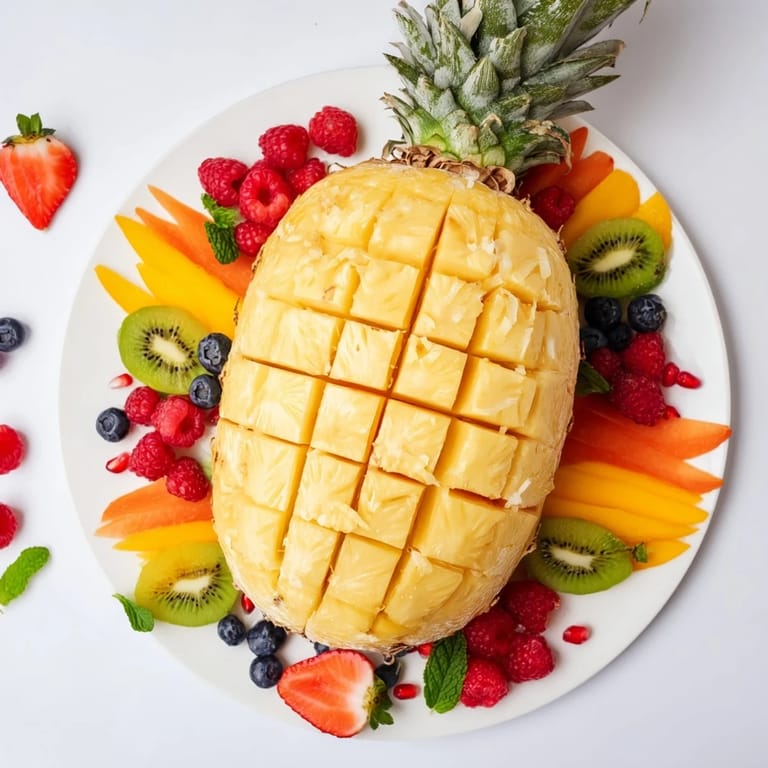
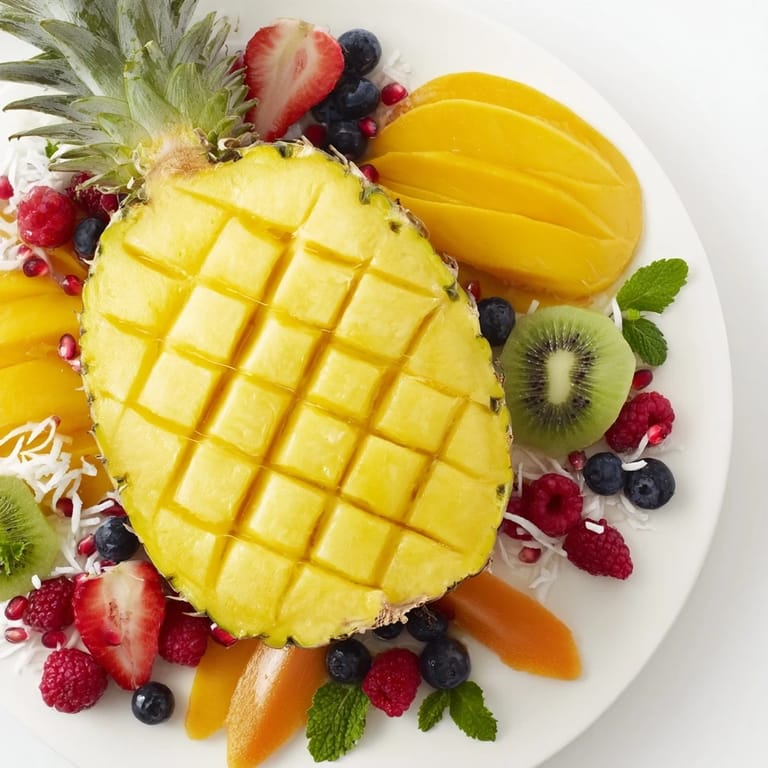
- 1 large ripe pineapple, halved vertically: The star of the show—look for one with a slight give when you press it and a fragrant crown. The hollow core should be trimmed cleanly so you have a beautiful canvas to work with. I always score the flesh in a crosshatch pattern because it makes serving effortless and shows off that golden interior.
- 2 kiwis, peeled and sliced: These bright green jewels add tartness and visual contrast. Pro tip: slice them right before assembly so they don't weep and lose their vibrant color.
- 1 mango, peeled and sliced: Choose one that yields slightly to pressure—that's when the sweetness is at its peak. The golden color alone makes the whole platter sing.
- 1 papaya, peeled, seeded, and sliced: This one has a delicate, buttery texture that contrasts beautifully with firmer fruits. Remove those black seeds completely for a cleaner look.
- 1 small dragon fruit, peeled and sliced: The pale pink or white flesh with those tiny black seeds creates an almost otherworldly elegance. This is the fruit that makes people ask, 'What is that beautiful thing?'
- 1 cup strawberries, hulled and halved: Choose berries that are deep red and fragrant—they're naturally sweet little flavor bombs that ground the tropical elements.
- 1 cup seedless grapes, halved: I prefer red grapes for their deeper sweetness, but green offers a nice tartness. Halving them helps them nestle into gaps and makes them easier to eat from the platter.
- 1/2 cup blueberries: These tiny orbs of concentrated sweetness add pops of deep purple-blue that make the arrangement visually irresistible.
- 1/2 cup raspberries: Handle these gently—their delicate structure is part of their charm, and they should be one of the last things you place.
- 1/2 cup pomegranate arils: Those jewel-like seeds not only look stunning but add a slightly tart crunch that keeps every bite interesting.
- 1/4 cup unsweetened shredded coconut: This adds textural contrast and whispers of tropical warmth. Toasting it lightly beforehand makes it even more fragrant, though I often skip this step when time is tight.
- Fresh mint leaves: Beyond their beauty, mint leaves wake up the palate and their green adds a fresh accent that ties everything together.
Tired of Takeout? 🥡
Get 10 meals you can make faster than delivery arrives. Seriously.
One email. No spam. Unsubscribe anytime.
Instructions
- Prepare your canvas:
- Place that pineapple half, cut-side up, dead center on your largest serving platter. This is your anchor. With a sharp paring knife, score the golden flesh in a crosshatch pattern—think of it like you're gently creating little cubes that someone can easily scoop with a spoon. The skin and crown stay intact, creating this magnificent natural bowl. Take a moment to appreciate it; you've just done the hard part.
- Create a color wheel:
- Now comes the fun—fan out your mango, papaya, and dragon fruit slices in gentle arcs radiating outward from the pineapple. Alternate the colors as you go: golden mango, peachy papaya, pale pink dragon fruit. This is where you're thinking like an artist, not a cook. Each color should have a partner to create visual rhythm.
- Fill the spaces with joy:
- Around and between these fanned fruits, nestle your kiwi slices with their brilliant green, tuck strawberry halves into gaps, scatter those halved grapes to fill empty spaces, and add pockets of blueberries and raspberries. Sprinkle pomegranate arils like ruby jewels. You're aiming for abundance without crowding—every inch should feel alive with color, but you should still see some of the white platter peeking through to let the colors breathe.
- Finish with grace:
- Sprinkle that shredded coconut lightly over the entire arrangement—it catches light and adds an almost snowy texture that says 'tropical.' Tuck fresh mint leaves into strategic spots, letting a few stand tall so their green tops draw the eye.
- Serve with presence:
- Bring this beauty straight to the table immediately for maximum impact. The fruits are at their freshest, the colors are at their most vibrant, and everyone gets to witness the full effect. If you must prepare ahead, cover it loosely with plastic wrap and refrigerate for up to 2 hours—it'll stay fresh and chilled, ready to impress.
 Pin
Pin There's a moment, right after you've arranged everything and you step back to see the full platter for the first time, where you suddenly understand why food matters beyond nutrition. It's art you can eat. I've had people tell me this was the most beautiful dessert they've ever seen, and the taste—simple, natural, honest—somehow matched that beauty perfectly.
Selecting Fruit That Sings
The secret to this platter isn't technique; it's choosing fruit at its absolute peak. Visit a market where you can touch and smell everything. The pineapple should have a light fragrance at the base and give slightly when pressed—never buy the hard ones, they won't have developed their sweetness. Mangoes should feel almost heavy for their size with skin that gives to gentle pressure. Dragon fruit is tricky because it looks perfect when it's actually past its prime, so look for one with vibrant color and very slight softness. This is one recipe where the quality of your ingredients is everything, and it shows.
The Art of Arrangement
I've learned that arranging a fruit platter isn't about symmetry for symmetry's sake—it's about creating visual flow. The human eye follows lines, so those fanned slices radiating from the pineapple naturally draw people in. Think of warm colors (mango, strawberry, papaya) as your headline, cool colors (kiwi, blueberry, dragon fruit) as your accent, and neutral coconut as your frame. When in doubt, step back and squint at what you've created. If your brain immediately registers 'colorful and abundant,' you've got it right. If it feels patchy, scatter a few more berries in the blank spots and call it done.
Serving Suggestions and Optional Upgrades
This platter is gorgeous and complete on its own, but it welcomes a few finishing touches that elevate it from beautiful to memorable. A light drizzle of honey pooled in the pineapple flesh adds sweetness and creates little pools of golden that catch light. Fresh lime juice squeezed right before serving brightens every fruit and adds a subtle tartness that makes the natural sugars pop. On the side, offer a small bowl of coconut cream or thick Greek yogurt for dipping—some guests want that creamy contrast, and it transforms the platter into an interactive experience. For beverages, a chilled Moscato with its slight sweetness or sparkling water with lime rounds float perfectly alongside this. Here's what I always remember to mention: if serving to anyone with tree nut allergies, skip or note the coconut, and always double-check packaged dried or frozen fruits for cross-contamination warnings.
- Swap in seasonal fruits like starfruit, passion fruit, or lychee whenever you find them—the formula stays the same, just play with what's fresh
- For a special touch, lightly toast the shredded coconut in a dry pan for 2-3 minutes before sprinkling; it deepens the flavor and aroma
- Chill your platter and all serving utensils for 15 minutes before assembling so the fruit stays cool and refreshing longer
 Pin
Pin This tropical platter taught me that sometimes the most impressive things you can create in a kitchen involve no heat, no techniques, just attention to detail and quality ingredients. It's a reminder that food doesn't have to be complicated to be beautiful.
Recipe FAQ
- → How do I prepare the pineapple for serving?
Cut the pineapple in half vertically, trim the core, and score the flesh in a crosshatch pattern to make serving easier while keeping the skin and leaves intact for presentation.
- → Can I substitute other fruits in this platter?
Yes, seasonal tropical fruits like starfruit, passion fruit, or lychee can be added or swapped to customize the display and flavor.
- → What is a good garnish to enhance the platter?
Sprinkle unsweetened shredded coconut over the fruits and top with fresh mint leaves to add texture and a fresh aroma.
- → How should this platter be served and stored?
Serve immediately for best freshness, or cover and refrigerate for up to two hours before serving to keep fruits cool and vibrant.
- → Are there recommended pairings for this fruit arrangement?
This platter pairs well with yogurt or coconut cream for dipping, and is complemented nicely by a chilled Moscato or sparkling water with lime.