 Pin
Pin My uncle brought a bottle of sloe gin back from a foraging trip in the New Forest, and it sat in our kitchen cabinet for months until a particularly bitter November evening when I needed to do something with venison from a farmer's market haul. That gin, with its dark berry notes and subtle tannins, seemed like the obvious choice for a stew that wanted to taste like autumn itself. The moment the liquid hit the hot pan and began to reduce, filling the kitchen with this intoxicating fruity-herbal steam, I knew this was going to become a regular thing in our winter rotation.
I made this for a dinner party where everyone arrived skeptical about venison, and I watched their expressions shift as they tasted that first spoonful and realized they'd been missing out. The stew had been simmering for nearly three hours by then, filling the whole house with this deep, wintry aroma that somehow smelled expensive and homemade at the same time. By the end of the evening, someone asked for the recipe, and another guest was already planning to hunt for sloe gin online.
Ingredients
- Venison shoulder, 800 g in 3 cm cubes: The shoulder is more forgiving than lean cuts, holding enough connective tissue to transform into unctuousness during the long braise; ask your butcher to cut it into uniform pieces so everything cooks evenly.
- Olive oil, 2 tbsp: Use a mid-range quality oil that won't smoke or overpower; you're just creating a foundation for browning, not making a statement.
- Onion, carrots, and celery, finely prepped: This holy trinity needs to be soft enough to almost disappear into the sauce, building flavor layers rather than providing texture.
- Garlic cloves, 2 minced: Mince them small so they distribute evenly and cook down without turning bitter or harsh.
- Tomato paste, 2 tbsp: A concentrate of umami that deepens the base; cook it with the garlic for a minute to wake it up.
- Sloe gin, 150 ml: This is the heart of the recipe, bringing earthiness and berry complexity that no other ingredient can replace; if you absolutely cannot find it, port works but tastes noticeably different.
- Beef or game stock, 400 ml: Game stock is ideal since it understands venison's nature, but good beef stock won't disappoint; use the gluten-free version if that matters to your table.
- Redcurrant jelly, 1 tbsp: A small amount cuts through richness and adds a subtle sweetness that balances the gin's dry notes.
- Bay leaves and fresh thyme, 2 and 2 sprigs: These aromatics should be fished out before serving, so don't chop them; leave them whole so they're easy to spot.
- Juniper berries, 1 tsp crushed: Crush them lightly with the side of a knife just before adding so their volatile oils stay bright and piney rather than stale.
- Salt and pepper: Season gently at first; taste after the venison is tender because the liquid will have reduced and concentrated.
- Whole milk and water for polenta, 750 ml and 250 ml: The milk creates richness while the water keeps it from becoming too heavy; use cold milk straight from the fridge to prevent lumps.
- Polenta, 150 g: Quick-cooking polenta saves time without sacrificing texture; stir constantly to prevent that gritty, underdone center that ruins everything.
- Unsalted butter and Parmesan, 40 g and 50 g: Both go in at the end so their delicate flavors don't cook away; use freshly grated Parmesan if you can, as pre-grated versions sometimes contain anti-caking agents that make polenta gummy.
Tired of Takeout? 🥡
Get 10 meals you can make faster than delivery arrives. Seriously.
One email. No spam. Unsubscribe anytime.
Instructions
- Brown your venison in batches:
- Heat the olive oil until it shimmers, then add the venison in pieces that don't touch each other; let them sit undisturbed for a few minutes so they develop a deep golden crust. Work in batches so you're not crowding the pan and steaming the meat instead of browning it.
- Build your flavor base:
- Once the venison is set aside, add onion, carrots, and celery to the same pot, letting them soften into the residual heat and browned bits stuck to the bottom. After five to seven minutes, stir in the minced garlic and tomato paste, cooking for just another minute so the paste loses its raw edge without browning.
- Wake up the sloe gin:
- Return the venison to the pot, pour in the sloe gin, and let it bubble and reduce for two minutes, watching as the alcohol cooks off and the liquid transforms from sharp to silky. This moment matters because it mellows the gin's intensity while concentrating its flavor.
- Simmer gently for two hours:
- Add the stock, redcurrant jelly, bay leaves, thyme sprigs, and crushed juniper berries, then season with salt and pepper before bringing everything to a simmer. Cover the pot and reduce the heat to its lowest setting, stirring occasionally so nothing settles and burns, until the venison is so tender it nearly dissolves when you press it with a spoon.
- Prepare polenta while the stew cooks:
- Heat milk and water together in a separate saucepan until you see wisps of steam, then slowly whisk in the polenta while pouring so it doesn't clump. Stir constantly for five to ten minutes over low heat, watching it transform from thin and grainy to thick and creamy.
- Finish the polenta with richness:
- Once the polenta is thick enough that your wooden spoon stands up in it, stir in the butter and freshly grated Parmesan, then taste and adjust salt. The cheese will melt into the warm polenta, creating this almost silky mouthfeel.
- Serve and savor:
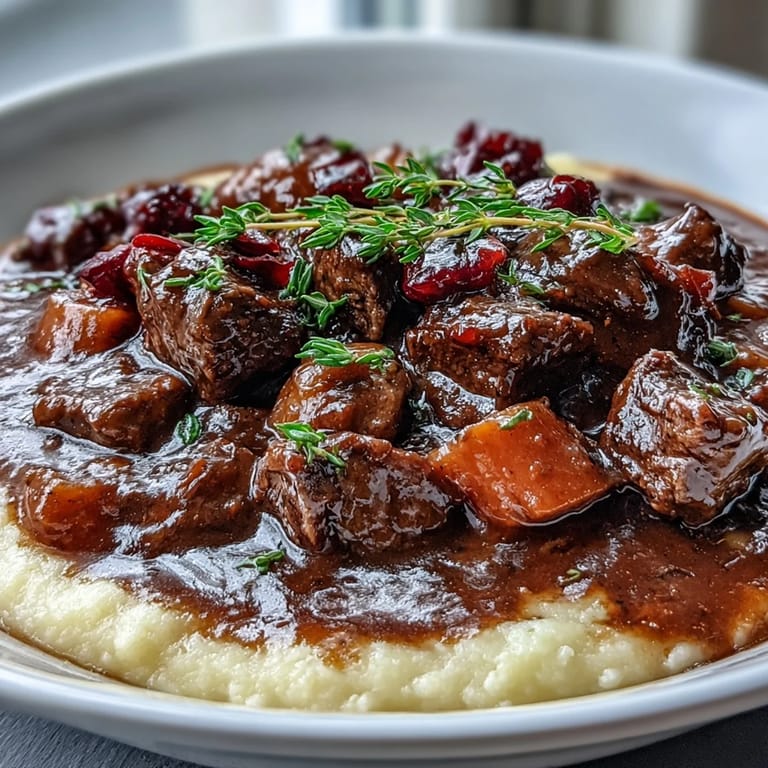
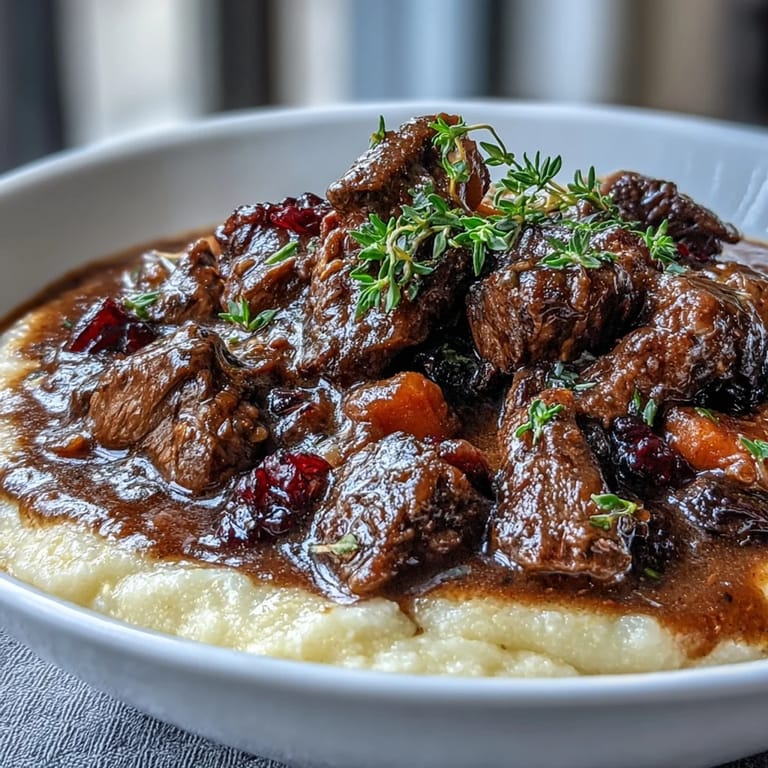
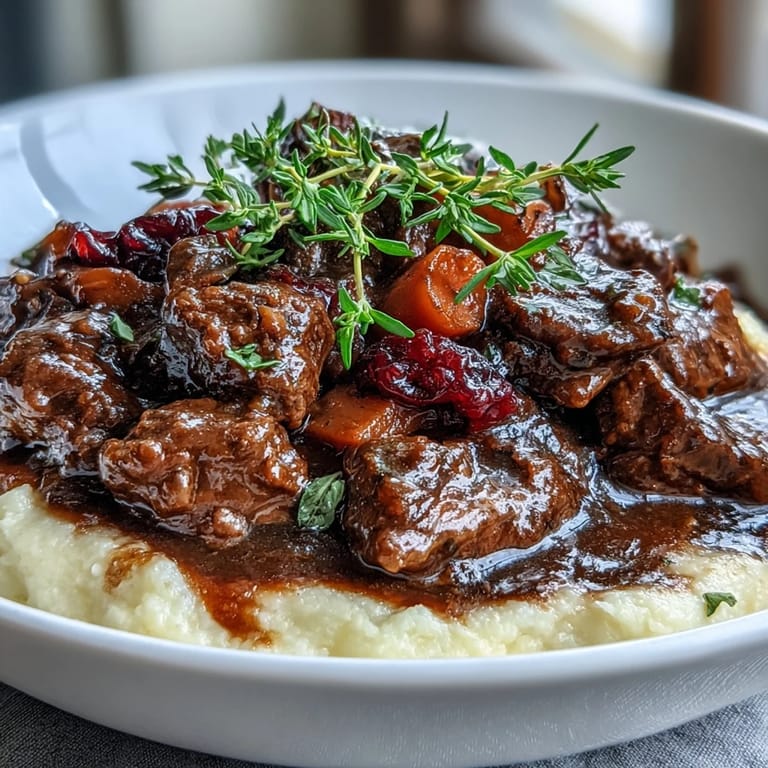
- Remove the bay leaves and thyme sprigs from the stew, then ladle it generously over a mound of creamy polenta. The stew's richness will pool around the polenta, creating this beautiful contrast of soft and slightly firm.
 Pin
Pin There's something about sitting down to this stew on a cold night that feels ceremonial without being fussy, like you're honoring both the animal and the season simultaneously. The first time my partner tasted it, he went quiet in that way that means the food is working, and we finished the bottle of wine in comfortable silence, just the clink of spoons and the warmth spreading through our chests.
Why Venison Works in Winter Stew
Venison has a natural affinity for slow cooking that other meats sometimes fight against, and when you pair it with berries and gin, you're essentially cooking with ingredients that lived in the same landscape. The meat's slight gaminess—which some people fear—actually becomes an asset here because the sloe gin and redcurrant jelly have enough personality to dialogue with it rather than mask it. This isn't about taming venison into submission; it's about letting each component express itself while creating something unified.
The Magic of Sloe Gin in Savory Cooking
Sloe gin isn't just a digestif or a forgotten bottle at the back of the cabinet; it's a legitimate cooking ingredient that brings sophistication to braised meats in ways that other liqueurs struggle to achieve. The blackthorn berries give it an almost medicinal earthiness, while the gin base adds botanical complexity that standard port or wine can't quite replicate. Once you've used it in a stew, you'll start thinking about it for game birds, beef cheeks, and anywhere else a deepening of flavor would feel like coming home.
Polenta Wisdom and Variations
Polenta gets a reputation for being finicky, but the secret is accepting that it requires attention without being complicated; stir it often, keep the heat low, and resist the urge to walk away. The difference between creamy and grainy polenta is usually just a few moments of inconsistent stirring, so commit to standing there with your whisk. Some nights I add crispy pancetta to the polenta, other times a handful of sautéed mushrooms, and the stew adapts beautifully to whatever richness you're adding underneath.
- Quick-cooking polenta saves nearly half the time without sacrificing a single bit of flavor or texture.
- If your polenta begins to seize up during cooking, whisk in a splash of cold milk to loosen it back to pourable consistency.
- Polenta can be made up to thirty minutes ahead and kept warm in a double boiler, though it's best served freshly made while still steaming.
 Pin
Pin This stew has become my go-to for impressing people without spending the whole day cooking, and for reminding myself that good food doesn't need to be complicated, just intentional. Every bowl is a little different depending on which vegetables soften fastest and how the stew reduces, which means there's always a small mystery to discover even when you're making it for the fifth time.
Recipe FAQ
- → Can I substitute venison with another meat?
Yes, beef chuck or lamb shoulder work well as alternatives. Adjust cooking time as needed to achieve tender results.
- → What can I use instead of sloe gin?
Port, red wine, or berry liqueurs make excellent substitutes. Each adds a different flavor profile but maintains the richness of the dish.
- → How do I prevent polenta from becoming lumpy?
Whisk constantly while gradually adding polenta to simmering liquid. Maintain low heat and stir frequently throughout cooking for smooth, creamy results.
- → Can this stew be made ahead of time?
Absolutely. The stew tastes even better the next day as flavors develop. Reheat gently and prepare fresh polenta when ready to serve.
- → What wine pairs best with venison stew?
Full-bodied red wines like Shiraz, Cabernet Sauvignon, or Malbec complement the rich, gamey flavors beautifully.
- → Is this dish suitable for freezing?
The stew freezes excellently for up to three months. Polenta is best prepared fresh as it doesn't freeze well.